Who is Luca Signorelli?
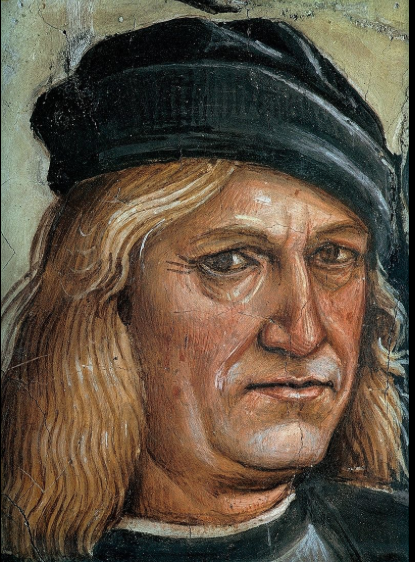
Luca Signorelli is one of the most important artists of the Italian Renaissance. A student of Piero della Francesca, he went on to influence Raphael, Perugino and, last but not least, the divine Michelangelo.
Signorelli was born in about 1450 in the Tuscan hill town Cortona, more recently made famous by Frances Mayes’s best-selling memoir Under the Tuscan Sun (1996) and by Diane Lane’s movie of the same name. But in the fifteenth century, Cortona was the perfect incubator and cradle for the man who went on to revolutionize the depiction of the naked human body.
As a young artist in Tuscany and Umbria, Signorelli rapidly made a name for himself as a painter of religious scenes. His genius was recognized by none other than Lorenzo de’ Medici and Pope Sixtus IV, who selected Signorelli, along with superstars Botticelli and Ghirlandaio, to fresco the sidewalls of the Sistine Chapel. This commission was in 1481-1482, when Signorelli was only thirty-years-old and decades before Michelangelo ventured into the Vatican.
Signorelli’s Sistine Chapel fresco depicts The Testament and Death of Moses, an important story in the history of the church, but is astonishing due to the incongruous nude seated with legs crossed — the better to show off his muscular torso — before the throne of bearded and book-reading Moses. This was an early harbinger of Signorelli’s fascination with the male nude and his ability to illustrate Biblical themes with human nudity.
This signature Signorelli talent achieved its pinnacle in his frescoes in the Cathedral at Orvieto where Signorelli painted scenes from the End of the World and the Last Judgment using scores of figures — angelic, human and demonic — swirling, writhing, screaming, covering their ears, tearing their hair, some tortured, some saved, all depicted with an unprecedented mastery of human anatomy, foreshortening and action-packed drama.

Both Raphael and Michelangelo studied Signorelli’s frescoes at Orvieto, and Michelangelo’s Last Judgment on the altar wall of the Sistine Chapel reflects the influence of Signorelli.
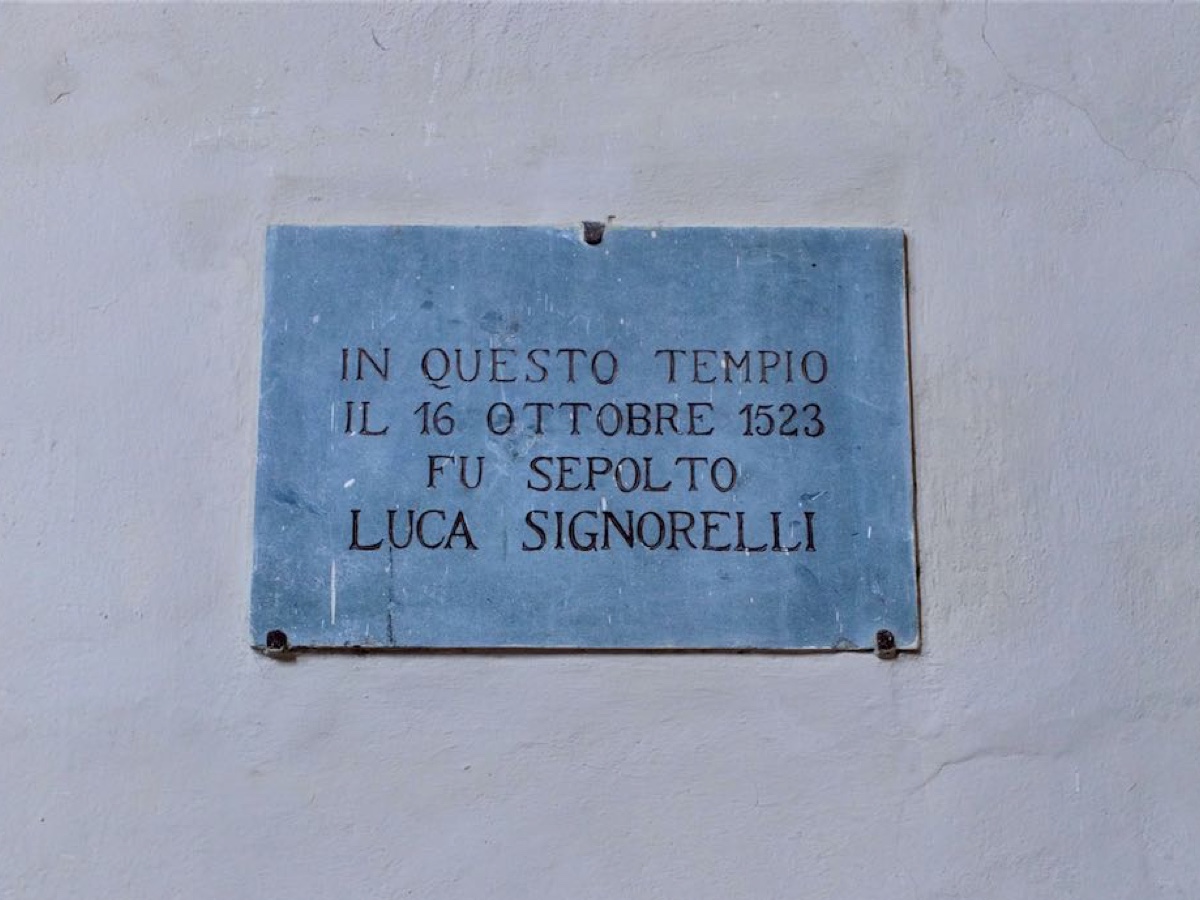
Signorelli died in 1523 and is buried in the church of San Francesco in Cortona.